Isuzu KB300 Injector Problems: Common Causes, Symptoms & Solutions (Complete South African Guide)
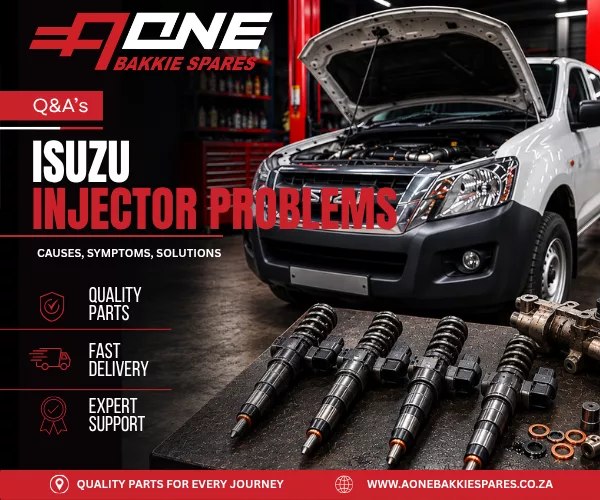
Is Your Isuzu KB300 Having Injector Problems? Here’s What You Need to Know
The Isuzu KB300 D-TEQ (4JJ1 3.0 Diesel) has earned a reputation as one of South Africa’s toughest and most dependable bakkies. Whether it’s towing heavy loads, working on farms, tackling construction sites or travelling long distances, the KB300 is built to handle demanding conditions.
Despite its reliability, one issue that becomes increasingly common as these vehicles age is fuel injector problems.
Faulty injectors don’t usually fail overnight. They often show subtle warning signs first, such as rough idling, increased fuel consumption or difficult starting. Ignoring these symptoms can eventually lead to expensive engine repairs.
In this guide, we’ll explain the most common injector problems, how to diagnose them, and which replacement parts may be required.
Common Symptoms of Faulty Injectors
If your Isuzu KB300 has injector problems, you may notice one or more of the following:
- Hard starting
- Rough idle
- Engine shaking
- White smoke
- Black smoke
- Excessive diesel smell
- Poor fuel economy
- Loss of power
- Engine knocking
- Engine warning light
- Limp mode
- Slow acceleration
- Difficult cold starts
- Increased engine vibration
If several of these symptoms occur together, the injectors should be tested before replacing other engine components.
1. Worn Injector Nozzles
Over thousands of kilometres, injector nozzles gradually wear.
Instead of producing a fine diesel mist, they begin spraying unevenly, resulting in poor combustion.
Symptoms
- Reduced power
- Increased fuel consumption
- White smoke
- Rough idle
- Hard starting
Solution
Depending on wear, injectors may be professionally tested, rebuilt or replaced.
2. Leaking Injector Seals (Copper Washers)
The copper sealing washer beneath each injector is a common wear item.
Once it begins leaking, combustion gases escape around the injector.
Symptoms
- Chuffing sound
- Diesel smell
- Carbon build-up around injectors
- Rough idle
- Reduced engine performance
Ignoring leaking seals can eventually damage the injector bore in the cylinder head.
3. Contaminated Diesel
Poor-quality diesel remains one of the biggest causes of injector damage in South Africa.
Water, dirt and other contaminants can quickly damage the precision components inside modern common rail injectors.
Symptoms
- Hard starting
- Misfiring
- Rough running
- Injector failure
- Loss of power
Always fill up at reputable fuel stations and replace the fuel filter at recommended intervals.
4. Blocked Fuel Filter
A partially blocked fuel filter reduces fuel supply to the injectors.
The engine may struggle under load or hesitate during acceleration.
Symptoms
- Poor acceleration
- Engine hesitation
- Difficult starting
- Reduced power
- Increased fuel consumption
Replacing the fuel filter is one of the simplest ways to protect your injection system.
5. High-Pressure Fuel Pump Problems
The injectors rely on the high-pressure fuel pump to deliver diesel at extremely high pressure.
If the pump begins to wear, injector performance is affected.
Symptoms
- Hard starting
- Poor acceleration
- Engine warning light
- Loss of power
- Limp mode
A complete fuel system inspection is recommended before replacing injectors.
6. Injector Electrical Failure
Modern injectors are electronically controlled.
Internal electrical faults or damaged wiring can prevent injectors from operating correctly.
Symptoms
- Engine warning light
- Rough running
- Misfire
- One cylinder not firing
Diagnostic scanning usually identifies electrical injector faults quickly.
7. Carbon Build-Up
Carbon deposits accumulate over time around injectors and inside the combustion chamber.
This affects injector spray patterns and combustion efficiency.
Symptoms
- Black smoke
- Rough idle
- Reduced performance
- Poor fuel economy
Professional injector cleaning may help in the early stages.
8. Incorrect Injector Coding
Replacement injectors on the Isuzu KB300 often require coding to the engine control unit (ECU).
If coding is incorrect or skipped, the engine may not run properly.
Symptoms
- Rough idle
- Poor performance
- Engine warning light
- Increased fuel consumption
Always ensure replacement injectors are coded using the correct diagnostic equipment.
9. Low Fuel Rail Pressure
Fuel rail pressure problems can mimic injector failure.
Common causes include:
- Faulty pressure regulator
- Worn fuel pump
- Leaking injectors
- Fuel supply restrictions
Symptoms
- Hard starting
- Loss of power
- Engine stalls
- Limp mode
Pressure testing should always form part of the diagnosis.
10. High Mileage Wear
Even well-maintained injectors eventually wear out.
Many Isuzu KB300s in South Africa have exceeded 250,000–400,000 km.
Wear becomes more noticeable with age.
Symptoms
- Gradual power loss
- Increased fuel usage
- Rough idle
- Smoke
At higher mileages, professional injector testing becomes worthwhile.
How Injector Problems Are Diagnosed
Replacing injectors without testing can become very expensive.
A proper diagnosis should include:
- Scan for fault codes.
- Inspect injector leak-off rates.
- Check fuel rail pressure.
- Test injector balance.
- Inspect injector seals.
- Check fuel filter condition.
- Inspect high-pressure fuel pump.
- Verify injector coding.
- Check for contaminated diesel.
Accurate testing often identifies the real problem before unnecessary parts are replaced.
How to Prevent Injector Failure
Good maintenance significantly extends injector life.
We recommend:
- Replacing the fuel filter at recommended service intervals.
- Using quality diesel from reputable fuel stations.
- Avoiding running the tank extremely low.
- Servicing the fuel system regularly.
- Repairing fuel leaks immediately.
- Keeping water out of the fuel system.
- Having injectors professionally tested if symptoms develop.
Prevention is far cheaper than replacing a complete fuel system.
Genuine, Used & Replacement Parts Available
At A1 Bakkie Spares, we stock a wide range of quality Isuzu KB300 fuel system components, including:
- Fuel injectors
- Injector seals
- Copper washers
- Injector pipes
- Fuel rails
- High-pressure fuel pumps
- Fuel pressure regulators
- Fuel filters
- Fuel tanks
- Diesel pumps
- ECU components
- Wiring harnesses
- Engine sensors
- Glow plugs
- Turbochargers
- Engine parts
If you’re unsure which injector or fuel system component your vehicle requires, our experienced team can help identify the correct part for your specific Isuzu KB300 model.
Why Buy from A1 Bakkie Spares?
When your bakkie is your livelihood, downtime isn’t an option.
At A1 Bakkie Spares, we pride ourselves on supplying quality Isuzu parts backed by knowledgeable service.
Our customers choose us because we offer:
- Extensive stock of Isuzu KB300 parts
- Quality new and used components
- Competitive pricing
- Nationwide delivery
- Expert product advice
- Friendly customer support
Whether you’re a mechanic, workshop, fleet operator or private owner, we’ll help you find the right part the first time.
Frequently Asked Questions
What are the first signs of injector failure?
Hard starting, rough idling, increased fuel consumption, white smoke and reduced power are usually the earliest warning signs.
Can bad injectors cause black smoke?
Yes. Faulty injectors can deliver too much fuel, causing incomplete combustion and black exhaust smoke.
How long do Isuzu KB300 injectors last?
Injector lifespan varies depending on fuel quality, maintenance and driving conditions, but many last well beyond 200,000 km with proper care.
Can I drive with a faulty injector?
Driving with a faulty injector can lead to piston damage, excessive fuel consumption and further engine problems. It’s best to have the issue diagnosed promptly.
Should all injectors be replaced together?
Not always. Professional testing will determine whether one injector or multiple injectors require replacement.
Injector problems on the Isuzu KB300 are common as these reliable workhorses accumulate mileage, but early diagnosis can prevent costly engine damage. Symptoms such as hard starting, rough idling, white smoke and poor performance should never be ignored.
By maintaining the fuel system, replacing filters regularly and using quality diesel, you can significantly extend injector life.
If you’re looking for Isuzu KB300 injectors, injector seals, fuel system components or any other replacement parts, contact A1 Bakkie Spares. Our experienced team can help you source the correct parts quickly so you can keep your Isuzu performing at its best.